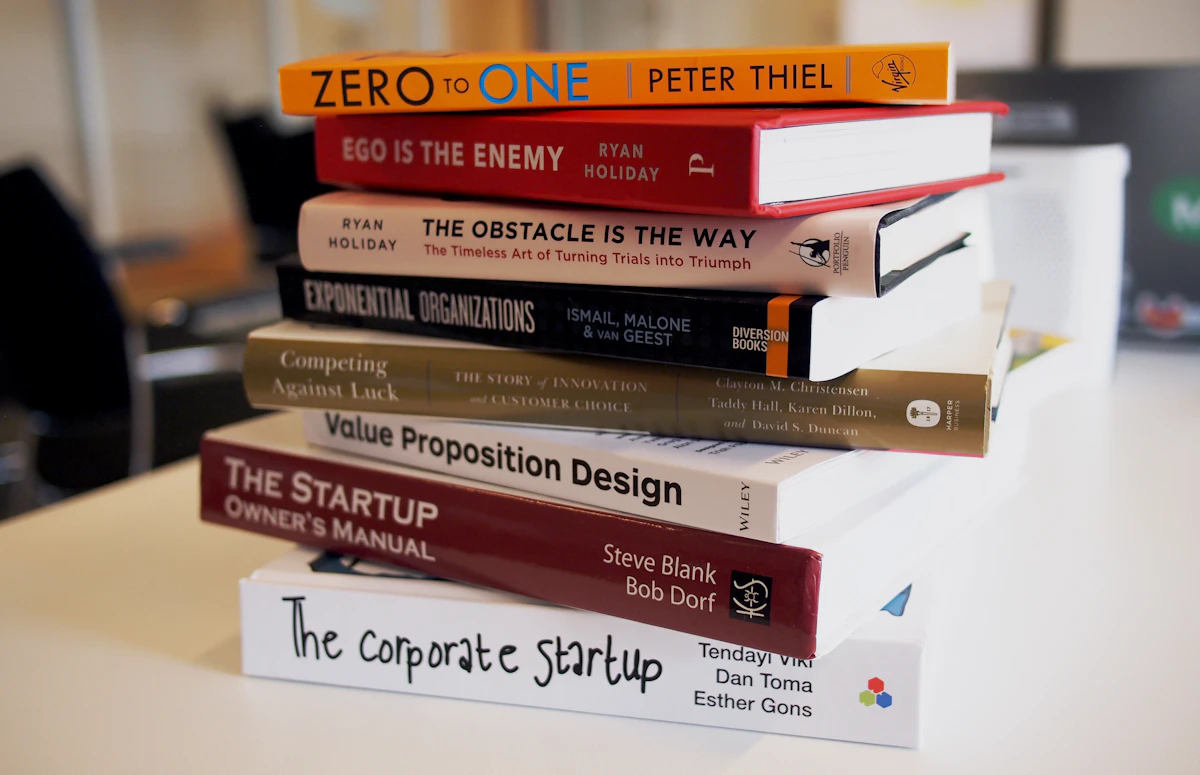
Reading the right business book at the right time can fundamentally change how you think about money, strategy, and your career. The challenge is not finding books — there are thousands published every year. The challenge is finding the ones that deliver genuine insight rather than recycled advice wrapped in a new cover.
Key Takeaways
- 1. The Psychology of Money by Morgan Housel
- 2. The Lean Startup by Eric Ries
- 3. I Will Teach You to Be Rich by Ramit Sethi
- 4. Zero to One by Peter Thiel
This list includes timeless classics that remain essential reading alongside newer titles that address the realities of building wealth and running businesses in 2026. Every book here was selected because it teaches principles you can apply immediately, not abstract theory that sounds good but leads nowhere.
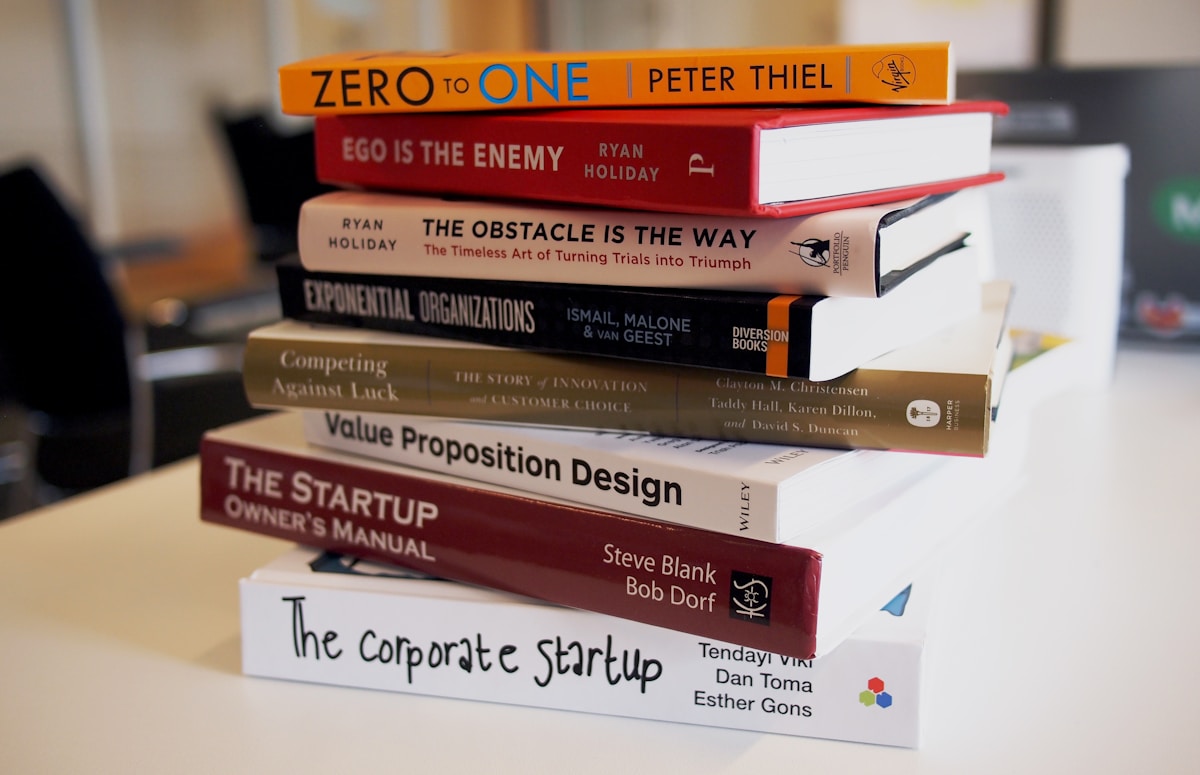
1. The Psychology of Money by Morgan Housel
This is the single best book on personal finance written in the last decade. Housel argues that financial success has less to do with intelligence or knowledge and everything to do with behavior. Through a series of short, compelling stories, he demonstrates how ordinary people build extraordinary wealth through patience and consistency, while brilliant people go broke through overconfidence and poor habits.
Key Takeaways
- Wealth is what you do not see — it is the money not spent, the car not bought, the house not upgraded
- Compounding is the most powerful force in investing, but it requires time and patience
- Your personal history with money shapes your financial decisions more than any spreadsheet
Best for: Anyone who wants to understand why they make the financial decisions they do and how to make better ones.
2. The Lean Startup by Eric Ries
First published in 2011, this book remains the foundational text for anyone building a product or starting a company. The core idea is simple but powerful: build a minimum viable product, measure how customers respond, and learn from the data before investing more resources. This build-measure-learn loop has become standard practice in startups worldwide.
Key Takeaways
- Validate your assumptions with real customers before building a complete product
- Pivot quickly when data shows your initial approach is not working
- Speed of learning matters more than speed of execution
Best for: Aspiring entrepreneurs and anyone involved in product development.
3. I Will Teach You to Be Rich by Ramit Sethi
Sethi strips away the guilt and shame that typically surround money conversations and delivers a practical, step-by-step system for automating your finances. The updated edition covers modern investment accounts, negotiation strategies, and conscious spending — the idea that you should spend extravagantly on the things you love and cut mercilessly on everything else.
Key Takeaways
- Automate your savings, investments, and bill payments so good financial behavior happens without willpower
- Focus on the big wins (salary negotiation, investment fees, housing costs) rather than cutting lattes
- Design a conscious spending plan that aligns with your actual val For more on this, see Why Reading More Can Improve Focus, Creativity, and Thinking.ues
Best for: People in their 20s and 30s who want a no-nonsense financial system they can set up once and maintain easily.

4. Zero to One by Peter Thiel
Thiel, co-founder of PayPal and an early Facebook investor, makes the case that true innovation means creating something entirely new rather than copying what already exists. Going from zero to one (creating something new) is fundamentally different from going from one to many (improving existing things). The book challenges conventional startup wisdom and argues for building monopolies rather than competing in crowded markets.
Key Takeaways
- Competition destroys profits — aim to build something so unique you have no direct competitors
- The most valuable businesses solve problems no one else is addressing
- Ask yourself: what important truth do very few people agree with you on?
Best for: Entrepreneurs and strategic thinkers who want to challenge their assumptions about competition and innovation.
5. Atomic Habits by James Clear
While not strictly a business book, Atomic Habits is essential reading for anyone who wants to improve their productivity and build better professional habits. Clear breaks down the science of habit formation into a practical framework: make good habits obvious, attractive, easy, and satisfying. Make bad habits invisible, unattractive, difficult, and unsatisfying.
Key Takeaways
- Small improvements of just 1% each day compound into remarkable results over time
- Focus on systems rather than goals — your systems determine your results
- Environment design is more powerful than willpower for changing behavior
Best for: Anyone who wants to build better professional habits and eliminate unproductive ones.
6. The Intelligent Investor by Benjamin Graham
Originally published in 1949, this remains the most important book on investing ever written. Warren Buffett has called it the best investing book ever published. Graham introduced the concepts of value investing, margin of safety, and the distinction between investing and speculating. The principles are as relevant in 2026 as they were 77 years ago.
Key Takeaways
- The market is driven by fear and greed in the short term but by value in the long term
- Always invest with a marg For more on this, see Best Books to Read This Year Across Every Genre.in of safety — buy assets for significantly less than they are worth
- An investor''s worst enemy is often themselves, not the market
Best for: Serious investors who want to understand the fundamental principles behind long-term wealth building through stocks and bonds.
7. Good to Great by Jim Collins
Collins and his research team spent five years analyzing companies that made the leap from average to exceptional performance. The findings are counterintuitive: the most successful companies were led by humble leaders, focused relentlessly on what they could be best at, and maintained a culture of disciplined people making disciplined decisions. For more on this, see African Wildlife Conservation Efforts Show Promising Results.
Key Takeaways
- Get the right people on the bus before deciding where to drive it
- The Hedgehog Concept: find the intersection of what you are passionate about, what you can be the best in the world at, and what drives your economic engine
- Greatness is not a function of circumstance but of conscious choice and discipline
Best for: Leaders, managers, and anyone building or growing an organization.

8. The 4-Hour Workweek by Tim Ferriss
Love it or critique it, this book fundamentally changed how a generation thinks about work and lifestyle design. Ferriss challenges the default script of working 40-plus years for retirement and proposes an alternative: automate income, eliminate unnecessary work, and design your ideal lifestyle now rather than deferring it to old age.
Key Takeaways
- Apply the 80/20 principle ruthlessly — 20% of your efforts produce 80% of your results
- Batching and automation can dramatically reduce the time you spend on routine tasks
- Define your ideal lifestyle first, then engineer the income to support it
Best for: Anyone feeling trapped in the conventional work model who wants to explore alternatives.
9. Same as Ever by Morgan Housel
Housel''s follow-up to The Psychology of Money takes a broader view, exploring the behaviors and patterns that never change regardless of how much the world evolves. While everyone focuses on predicting what will change next, Housel argues that understanding what stays the same is far more useful for making good decisions about money and life.
Key Takeaways
- Human behavior around risk, greed, fear, and storytelling has not changed in thousands of years
- The best predictions come from understanding timeless patterns, not chasing trends
- Expectations grow faster than income, which is why wealth does not always increase happiness
Best for: Readers who enjoyed The Psychology of Money and want deeper exploration of human behavior in financial contexts.
10. Thinking, Fast and Slow by Daniel Kahneman
Nobel laureate Kahneman spent decades researching how humans actually make decisions versus how we think we make decisions. The book reveals that our brains operate on two systems: fast, intuitive thinking that handles routine judgments, and slow, deliberate thinking that handles complex analysis. Most of our mistakes come from using the wrong system for the situation.
Key Takeaways
- Cognitive biases are not flaws you can simply decide to overcome — they require deliberate systems and processes to counteract
- Overconfidence is the most dangerous bias in business and investing
- Framing effects mean the same information presented differently leads to different decisions
Best for: Anyone who makes high-stakes decisions and wants to understand the hidden biases affecting their judgment.
How to Get the Most from Business Books
- Read actively — Take notes, highlight passages, and write down how each concept applies to your specific situation
- Apply one idea at a time — Do not try to implement everything from every book simultaneously. Pick one actionable takeaway and implement it before moving on
- Revisit books annually — The best business books reveal different insights as your experience grows
- Discuss with others — Join a book club or discuss concepts with colleagues to deepen your understanding
Final Thoughts
The books on this list share a common thread: they prioritize principles over tactics. Tactics change with technology and markets, but principles endure. Whether you are starting your first business, learning to invest, or trying to think more clearly about money, these books provide the mental models you will use for decades.
Start with whichever title addresses your most pressing need right now. One well-read book acted upon is worth more than twenty books skimmed and forgotten.
Related Articles on BlogVerdict
- Best Books to Read This Year Across Every Genre (Books & Literature)
- Why Reading More Can Improve Focus, Creativity, and Thinking (Books & Literature)
Summary Comparison
| Factor | Pros | Cons | Verdict |
|---|---|---|---|
| Cost | Various options | Premium can be expensive | Good value overall |
| Quality | High standard | Varies by provider | Research recommended |
| Accessibility | Widely available | Regional differences | Improving steadily |
| Support | Community + official | Response times vary | Adequ For more on this, see Aadhaar System: How India's Digital Identity Infrastructure Has Evolved.ate for most |
Related Reading on BlogVerdict
Explore more on this topic:
- African Wildlife Conservation Efforts Show Promising Results
- Aadhaar System: How India's Digital Identity Infrastructure Has Evolved
- Why Reading More Can Improve Focus, Creativity, and Thinking
- Best Books to Read This Year Across Every Genre
- ASEAN Nations Strengthen Regional Cooperation Agreement
Frequently Asked Questions
How were these selections chosen?
Selections are based on a combination of expert analysis, user reviews, real-world performance testing, and value for money. We update our recommendations regularly as new options become available.
Are these recommendations suitable for beginners?
Yes. We include options for all skill levels and budgets, with clear explanations of what makes each choice stand out.