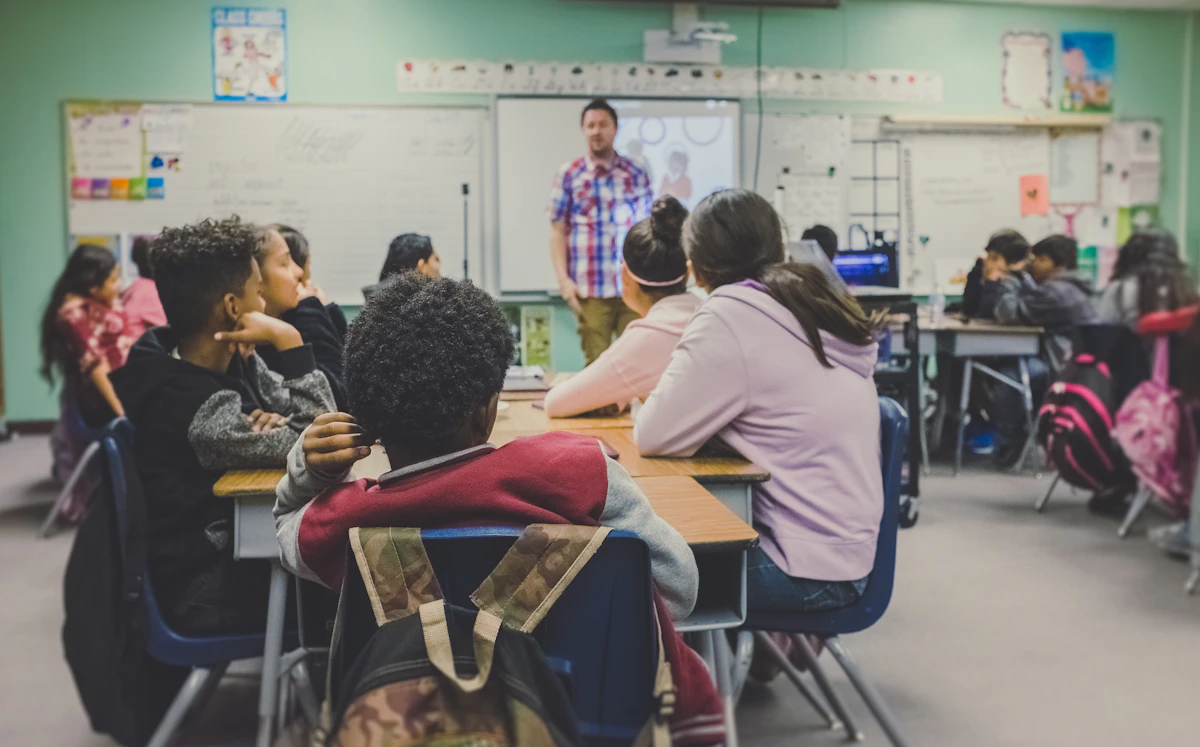
For centuries, education has followed roughly the same model: one teacher stands in front of many students and delivers the same lesson at the same pace for everyone. This model persists not because it is effective but because it was the only one that scaled. A single teacher cannot simultaneously provide personalized instruction to 30 students with different learning speeds, styles, and gaps.
Key Takeaways
- The Current State of AI in Education
- Personalized Learning at Scale
- How AI Is Changing the Teacher''s Role
- Challenges and Concerns
Artificial intelligence is changing that fundamental constraint. In 2026, AI-powered tools can provide personalized tutoring at scale, adapt content to individual learning speeds, identify knowledge gaps in real time, and free teachers to focus on what humans do best: mentoring, motivating, and developing critical thinking skills. The transformation is already underway, and it is moving faster than most people realize.
The Current State of AI in Education
AI in education is no longer theoretical. Millions of students and educators are using AI-powered tools daily, and the results are beginning to reshape how we think about teaching and learning.

AI Tutoring Systems
AI tutoring has advanced from simple question-and-answer systems to sophisticated learning companions that can explain concepts in multiple ways, adjust difficulty in real time, and maintain context across entire learning sessions. Tools like Khan Academy''s Khanmigo, powered by large language models, provide one-on-one tutoring experiences that were previously only available to students who could afford private tutors.

The impact is measurable. Studies from schools implementing AI tutoring in 2025 showed that students using AI-assisted learning improved test scores by an average of 15 to 30 percent compared to traditional instruction alone. The gains were largest among students who were struggling the most, suggesting that AI tutoring helps close achievement gaps rather than widen them.
Automated Assessment and Feedback
Grading consumes an enormous amount of teacher time, often 10 to 20 hours per week for a single teacher. AI can now grade many types of assignments instantly and provide detailed, personalized feedback that helps students understand not just what they got wrong but why and how to improve.
For subjects like math and science, automated grading is straightforward. But AI has also made significant progress in evaluating written work, providing feedback on argument structure, evidence use, clarity, and coherence. This does not replace human evaluation of nuanced writing, but it dramatically reduces the time teachers spend on routine assessment tasks.
Personalized Learning at Scale
The most significant aspect of AI in education is personalization. Traditional classrooms force every student to move at the same pace. Fast learners get bored while struggling students fall behind. AI enables a different model entirely.
Adaptive Learning Paths
AI systems can map each student''s knowledge, identify specific gaps, and create customized learning paths that address those gaps while building on existing strengths. If a student struggles with fractions, the AI does not just assign more fraction problems. It diagnoses whether the underlying issue is a conceptual misunderstanding, a procedural error, or a gap in prerequisite knowledge, then addresses the root cause.
This kind of diagnostic precision was previously only possible with the most skilled human tutors working one-on-one. AI makes it available to every student, in every classroom, at any time of day.
Multimodal Learning
Different students learn differently. Some are visual learners, some learn best through text, others through hands-on interaction, and many through some combination. AI can present the same concept through multiple modalities and track which approaches are most effective for each individual student, then prioritize those approaches in future lessons.
How AI Is Changing the Teacher''s Role
One of the biggest misconceptions about AI in education is that it will replace teachers. The evidence points in the opposite direction: AI is making teachers more effective by handling the tasks that consumed their time without requiring their unique human skills.

From Content Delivery to Mentorship
When AI handles routine content delivery, explanation, and assessment, teachers are freed to focus on higher-value activities:
- Facilitated discussions that develop critical thinking and communication skills
- Project-based learning that connects abstract concepts to real-world applications
- Social-emotional support that addresses the whole student, not just their academic performance
- Mentorship and guidance that helps students develop self-direction, curiosity, and resilience
These are the aspects of education that matter most for long-term student outcomes, and they are precisely the things that AI cannot do well. The teachers who embrace AI as a tool rather than viewing it as a threat will become far more effective educators.
Data-Driven Insights
AI gives teachers unprecedented visibility into student performance. Instead of relying on quarterly tests to discover that a student has fallen behind, teachers can see real-time dashboards showing exactly where each student stands, which concepts they have mastered, and where they are struggling. This allows for early intervention before small gaps become insurmountable obstacles.
Challenges and Concerns
The integration of AI into education is not without significant challenges. Addressing these concerns honestly is essential for responsible implementation.
The Digital Divide
AI-powered education requires reliable internet access and modern devices. Students in under-resourced schools and communities risk being left behind, potentially widening existing achievement gaps rather than closing them. Equitable access to AI educational tools must be a priority for policymakers and school administrators.
Academic Integrity
When students have access to AI tools that can generate essays, solve math problems, and write code, traditional assessment methods become problematic. Schools are grappling with how to evaluate student learning when AI can complete many traditional assignments. The solution is likely a shift toward process-based assessment that evaluates how students think and learn, not just what they produce.
Data Privacy
Personalized AI learning requires collecting detailed data about student performance, learning patterns, and behavior. Protecting this sensitive data, especially for minors, is a critical concern. Schools and EdTech companies must implement strong data protection practices and give parents transparency and control over how their children''s data is used.
Over-Reliance on Technology
There is a real risk that enthusiasm for AI leads to over-reliance on technology at the expense of human connection. Education is fundamentally a human endeavor, and the social, emotional, and relational aspects of learning cannot be automated. AI should augment human teaching, not replace the human elements that make education meaningful.
What Education Might Look Like in 2030
If current trends continue, education in 2030 will look dramatically different from today:
- Every student will have an AI tutor that knows their learning style, current knowledge level, and optimal pace
- Teachers will focus on facilitation rather than content delivery, spending most of their time on discussion, projects, and mentorship
- Assessment will be continuous rather than periodic, with AI tracking mastery in real time rather than testing it at fixed intervals
- Learning will be more self-directed, with students having agency over what they learn, how they learn it, and at what pace
- Credentials will shift from time-based degrees to competency-based certifications that verify specific skills and knowledge
What Students and Parents Should Do Now
The transition to AI-enhanced education is already happening. Here is how to position yourself or your children to benefit:
- Embrace AI tools for learning. AI tutors like Khanmigo and ChatGPT can supplement classroom instruction right now. Use them as study partners, not answer generators.
- Develop skills AI cannot replace: critical thinking, creativity, communication, collaboration, and emotional intelligence. These will become more valuable, not less, as AI handles routine cognitive tasks.
- Learn how AI works. Understanding AI at a basic level is becoming as fundamental as computer literacy was 20 years ago. You do not need to become an engineer, but you should understand what AI can and cannot do.
- Advocate for equitable access. Support policies and programs that ensure all students have access to AI educational tools, regardless of their school''s resources or their family''s income.
The Opportunity Ahead
AI in education represents one of the most significant opportunities to improve learning outcomes for students worldwide. For the first time in history, we have the technology to provide personalized, adaptive, high-quality instruction to every student, not just those who can afford private tutors or attend elite schools.
The technology is here. The evidence is growing. The question is not whether AI will transform education, but whether we will implement it in a way that is equitable, responsible, and genuinely focused on helping every student reach their potential. The choices we make in the next few years will determine the answer.
Related Articles on BlogVerdict
- The Rise of Micro-Schools: Why Parents Are Leaving Public Education (Education)
- AI in Healthcare: How Machine Learning Is Diagnosing Diseases Faster Than Doctors (Technology)
- How AI Agents Are Replacing Traditional Software in 2026 (Technology)
- ChatGPT vs Claude vs Gemini: The Ultimate AI Assistant Showdown in 2026 (Technology)
- How AI Agents Are Replacing Traditional Software (Technology)
Summary Comparison
| Factor | Pros | Cons | Verdict |
|---|---|---|---|
| Cost | Various options | Premium can be expensive | Good value overall |
| Quality | High standard | Varies by provider | Research recommended |
| Accessibility | Widely available | Regional differences | Improving steadily |
| Support | Community + official | Response times vary | Adequate for most |
Frequently Asked Questions
What are the main factors driving this trend?
The convergence of technological innovation, shifting consumer expectations, economic pressures, and regulatory changes are all contributing to this transformation. Each factor reinforces the others, creating momentum.
How will this affect everyday people?
The effects will vary by region and demographic, but most people will experience meaningful changes in how they work, consume, and interact with technology over the next 3-5 years.