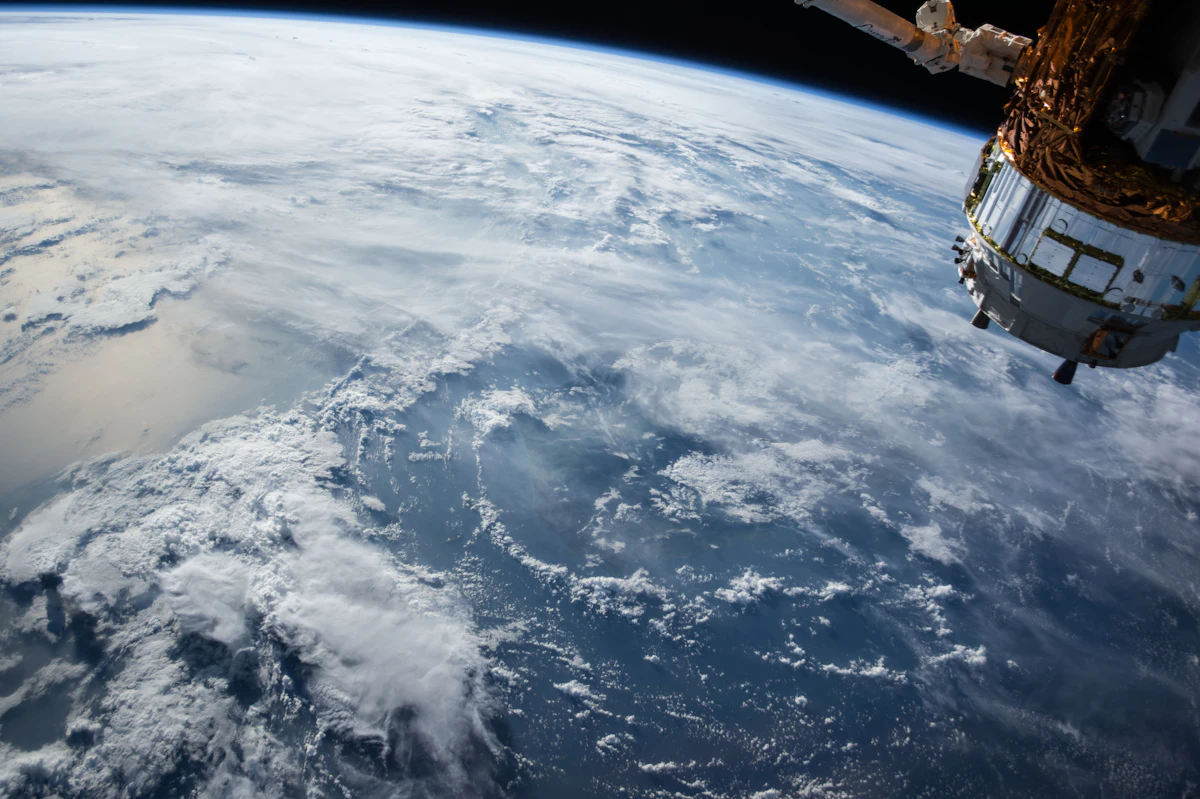
A New Golden Age of Space Exploration
Space exploration is experiencing a renaissance that would have seemed improbable just a decade ago. Multiple nations and private companies are pursuing ambitious missions to the Moon, Mars, and beyond, while ground-based and space-based observatories are delivering discoveries that fundamentally change our understanding of the universe. We are living through what future historians may well regard as the beginning of humanity''s true expansion into space.
Key Takeaways
- A New Golden Age of Space Exploration
- The Return to the Moon
- Mars: The Next Giant Leap
- Telescopes Revealing the Universe
The pace of progress is accelerating. Reusable rockets have dramatically reduced launch costs. New telescope technologies are revealing details about distant worlds that were invisible a few years ago. And the convergence of government ambition with private sector innovation has created a competitive, collaborative ecosystem that is pushing boundaries faster than either sector could alone.
The Return to the Moon
After more than half a century since the last Apollo mission, humans are returning to the Moon, and this time the goal is to stay. The Artemis program, led by NASA with international partners, represents the most ambitious lunar exploration effort in history, aiming not just to visit the Moon but to establish a sustained human presence.
The Artemis missions are building toward a permanent lunar base camp and the Gateway, a space station that will orbit the Moon and serve as a staging point for both lunar surface operations and eventual deep-space missions. The technological capabilities being developed for Artemis, from new spacesuits to lunar habitats to in-situ resource utilization systems, will lay the groundwork for human exploration throughout the solar system.
International Lunar Ambitions
The Moon is becoming an increasingly crowded destination. China''s Chang''e program has already achieved remarkable successes, including the first landing on the Moon''s far side, and has ambitious plans for a permanent research base. India''s Chandrayaan program demonstrated impressive capabilities with its successful polar landing. Japan, South Korea, and the European Space Agency all have active lunar programs.
This international competition, while it carries geopolitical dimensions, is fundamentally positive for space exploration. Multiple programs pursuing different approaches increases the likelihood of breakthroughs and creates redundancy that benefits the global scientific community. For more on this, see 10 Meals You Can Cook in Under 30 Minutes That Are Actually Healthy.
Mars: The Next Giant Leap
Mars remains the ultimate near-term destination for human space exploration, and the path toward crewed missions is becoming increasingly concrete. Both governmental agencies and private companies are developing the technologies and mission architectures that will be required to send humans to Mars and return them safely.
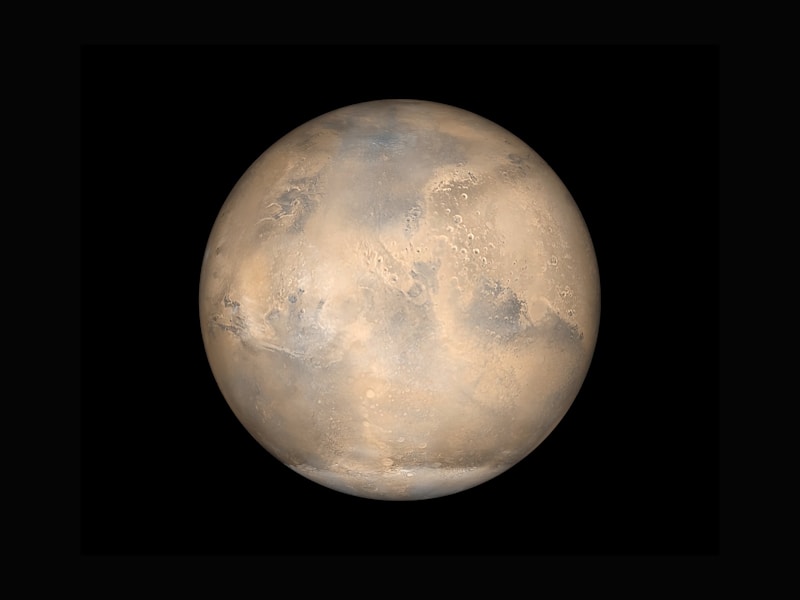
The challenges are immense. A round trip to Mars takes approximately two to three years with current propulsion technology. Astronauts would face prolonged exposure to cosmic radiation, the psychological challenges of extreme isolation, and the need to survive on a planet with a thin carbon dioxide atmosphere and temperatures that routinely drop below negative sixty degrees Celsius.
Robotic Pathfinders
Current robotic missions are gathering essential data for future human expeditions. NASA''s Perseverance rover continues to explore Jezero Crater, collecting rock samples that will be returned to Earth by a future sample return mission. These samples could provide definitive evidence about whether Mars ever harbored microbial life, one of the most profound scientific questions humanity has ever pursued.
China''s Zhurong rover has demonstrated the country''s growing capability in planetary exploration, and both ESA''s Rosalind Franklin rover and future missions are designed to search for signs of past or present life. Each robotic mission adds to our understanding of Mars''s environment and resources, reducing the risks for eventual human visitors.
Telescopes Revealing the Universe
The James Webb Space Telescope has transformed our understanding of the cosmos since its deployment, and it continues to deliver discoveries that rewrite astronomy textbooks. Operating at the For more on this, see 5G Changed Everything: The Real Impact Three Years Later. second Lagrange point, approximately 1.5 million kilometers from Earth, JWST observes the universe in infrared wavelengths that reveal phenomena invisible to previous telescopes.
JWST''s discoveries have been extraordinary. It has captured detailed images of the earliest galaxies ever observed, formed when the universe was less than a few hundred million years old. It has revealed the atmospheric compositions of exoplanets, detecting water vapor, carbon dioxide, and other molecules that are essential clues in the search for habitable worlds. And it has provided unprecedented views of star formation, planetary systems, and cosmic structures that are reshaping our models of how the universe evolves.
Next-Generation Observatories
JWST is just the beginning. Several next-generation telescopes are under development or entering operation that will push the boundaries of observation even further. Ground-based extremely large telescopes, with mirrors exceeding thirty meters in diameter, will achieve resolution that rivals or exceeds space-based telescopes For more on this, see African Union Summit Focuses on Continental Free Trade Progress.for certain observations. These instruments will be capable of directly imaging exoplanets and analyzing their atmospheres with enough precision to detect potential biosignatures.

The Search for Life Beyond Earth
The search for extraterrestrial life has moved from the fringes of science to its mainstream. Multiple missions and programs are actively looking for evidence of life beyond Earth, and the scientific community broadly agrees that the question is not whether life exists elsewhere in the universe, but where and when we will find it.
The most promising targets in our solar system include Mars, Europa (Jupiter''s moon), and Enceladus (Saturn''s moon). Both Europa and Enceladus harbor subsurface oceans of liquid water beneath their icy crusts, and both show evidence of hydrothermal activity that could provide the energy and chemical conditions necessary for life. Future missions to these moons could provide definitive evidence of extraterrestrial life within the coming decades. For more on this, see How Space Exploration Could Change Life on Earth.
Exoplanet Discoveries
Beyond our solar system, the catalog of known exoplanets now numbers in the thousands, and the pace of discovery continues to accelerate. More importantly, the ability to characterize these worlds, to determine their size, mass, orbital properties, and increasingly their atmospheric compositions, is improving rapidly. The identification of potentially habitable worlds orbiting nearby stars is no longer speculative. It is an active area of observational science.
Commercial Space and the New Economy
The commercialization of space is creating an entirely new economic sector. Beyond launch services, companies are developing plans for space manufacturing, asteroid mining, orbital tourism, and satellite-based services that could transform multiple industries on Earth.
Space tourism, while still extremely expensive, has moved from concept to reality. Multiple companies now offer or are developing suborbital and orbital tourism experiences, and the long-term trajectory suggests that space travel will become accessible to a growing number of people as technology matures and costs decline.
Final Thoughts
The current era of space exploration is remarkable for b For more on this, see Asteroid Near-Misses and Planetary Defense: How Earth Protects Itself.oth its ambition and its breadth. From returning humans to the Moon to searching for life on distant moons, from deploying revolutionary telescopes to building a commercial space economy, the range of activity is unprecedented. What makes this moment particularly exciting is that many of these missions and discoveries will produce results within the next decade, meaning we are likely to witness significant breakthroughs in our understanding of the cosmos and humanity''s place within it.
Related Articles on BlogVerdict
- How Space Exploration Could Change Life on Earth (Space & Astronomy)
Summary Comparison
| Factor | Pros | Cons | Verdict |
|---|---|---|---|
| Cost | Various options | Premium can be expensive | Good value overall |
| Quality | High standard | Varies by provider | Research recommended |
| Accessibility | Widely available | Regional differences | Improving steadily |
| Support | Community + official | Response times vary | Adequate for most |
Related Reading on BlogVerdict
Explore more on this topic:
- How Space Exploration Could Change Life on Earth
- 10 Meals You Can Cook in Under 30 Minutes That Are Actually Healthy
- African Union Summit Focuses on Continental Free Trade Progress
- Asteroid Near-Misses and Planetary Defense: How Earth Protects Itself
- 5G Changed Everything: The Real Impact Three Years Later
- Aadhaar System: How India's Digital Identity Infrastructure Has Evolved
Frequently Asked Questions
What is the main point from this article?
The most important insight is that understanding the fundamentals and staying informed about developments in this area can help you make better decisions and stay ahead of important changes.
Where can I learn more about this topic?
We recommend exploring the linked resources throughout this article, following authoritative sources in this field, and checking BlogVerdict regularly for updated coverage and analysis.